
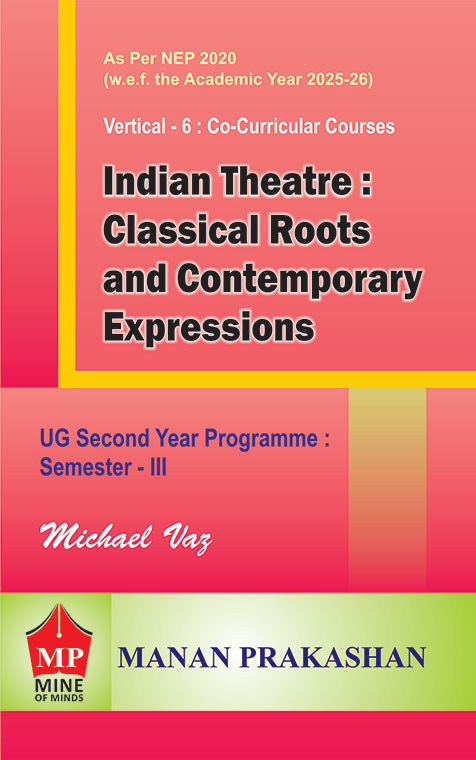
Description
Indian Theatre : Classical Roots and Contemporary Expressions
Vertical – 6 : CC
UG Second Year Programme : Semester III
Syllabus (As Per NEP 2020) w.e.f. the Academic Year 2025-26
Module 1 :
Unit – I : Indian Theatre : Historical Roots (7 lectures)
♦ History of Indian Drama, Origins: Historical Development: From Vedic Rituals to Sanskrit Drama, Medieval Folk Forms, Colonial Influences, and Post-independence Trends.
♦ Major Periods: Ancient (Natyashastra Era), Medieval (Bhakti and Folk Traditions), Modern (Colonial and Post-independence)
Unit – II : Bharata’s Natyashastra and Theatrical Principles (8 lectures)
♦ In-depth Analysis of Natyashastra, the Foundational Treatise on Indian Dramaturgy
♦ Key concepts:
–Natyagriha (Ancient Theatre Architecture)
–Rasa Theory – The Aesthetic Experience and Emotional Flavors
–Bhava, Abhinaya, and their Relevance in Classical Performance
–Influence of Natyashastra on Later Theatrical Tradition
Module 2 :
Unit – III : Classical Playwrights and Dramatic Texts (7 lectures)
♦ Critical Study of Major Classical Dramatists and Their Works :
–Kalidasa – Abhijnanasakuntalam, Malavikagnimitram
–Bhasa, Sudraka, Bhavabhuti – Key Themes and Innovations.
–Analysis of Plot Structure, Character Portrayal, and Cultural Context in Classical Play.
Unit – IV : Streams and Forms of Modern Indian Theatre (8 lectures)
♦ Commercial Theatre: Characteristics, Audience Engagement, and Production Values
♦ Experimental Theatre: Alternative Spaces, Innovative Storytelling, and Non-Linear Narratives
♦ Amateur Theatre: Community Participation, Regional Theatre Groups, and Resourceful Staging
♦ Children’s Theatre: Educational Objectives, Interactive Methods, and Imagination-Centered Content
♦ One-Act Plays: Structure, Brevity, and Intensity of Narrative
♦ Street Theatre (Nukkad Natak): Origin, Purpose, and Socio-Political Engagement

Reviews
There are no reviews yet.